Echoes
Echoes
The trip to France was borne of impulse and anger. Just one year ago we decided to leave the driving to Amtrak. The world was still emerging from the global COVID19 pandemic, and we reasoned that riding the rails provided a good biosafety compromise. From what we deduced using online tools we could travel from Philadelphia to destinations on the west coast semi-isolated and without recirculated aircraft atmosphere. Thus, our meeting with the AAA trip advisor resulted in the following itinerary. Departing Philadelphia bound for Chicago, then continuing to Seattle on the Empire Builder line. After a few days in Seattle, we would board the Starlight Express for a scenic ride down the California coast, terminating in San Francisco. Following three days in the shadow of the Golden Gate, we would be back aboard the train rolling to Pittsburgh pausing just long enough to transfer to a train pointed at Philly and home. Turns out there are a few other unique aspects of rolling on infinite steel rails Amtrack does not promote. Who could have guessed Incompetence would be a difficult attribute to market as a corporate advantage?
Amtrak literature neglected to mention raging forest fires that devour train trestles. Torrential rains that suspend drought desiccated topsoil in oceans of water, transforming it into thunderous waves of mud with enough kinetic energy to twist train tracks and ties into oversized rosary beads. Reservations made at hotels that were closed, prepaid tours that were more than a year out of date and forced disembarkation from the train in Grand Junction Colorado without accommodations or means to return to Philly. Thus, a Viking Cruise lines brochure and targeted commercials synergistically persuaded us that a riverboat cruise starting and ending in Paris was the proper corrective measure we required. Viking happily processed the splurge spending and in so doing also fixed our gaze toward August.
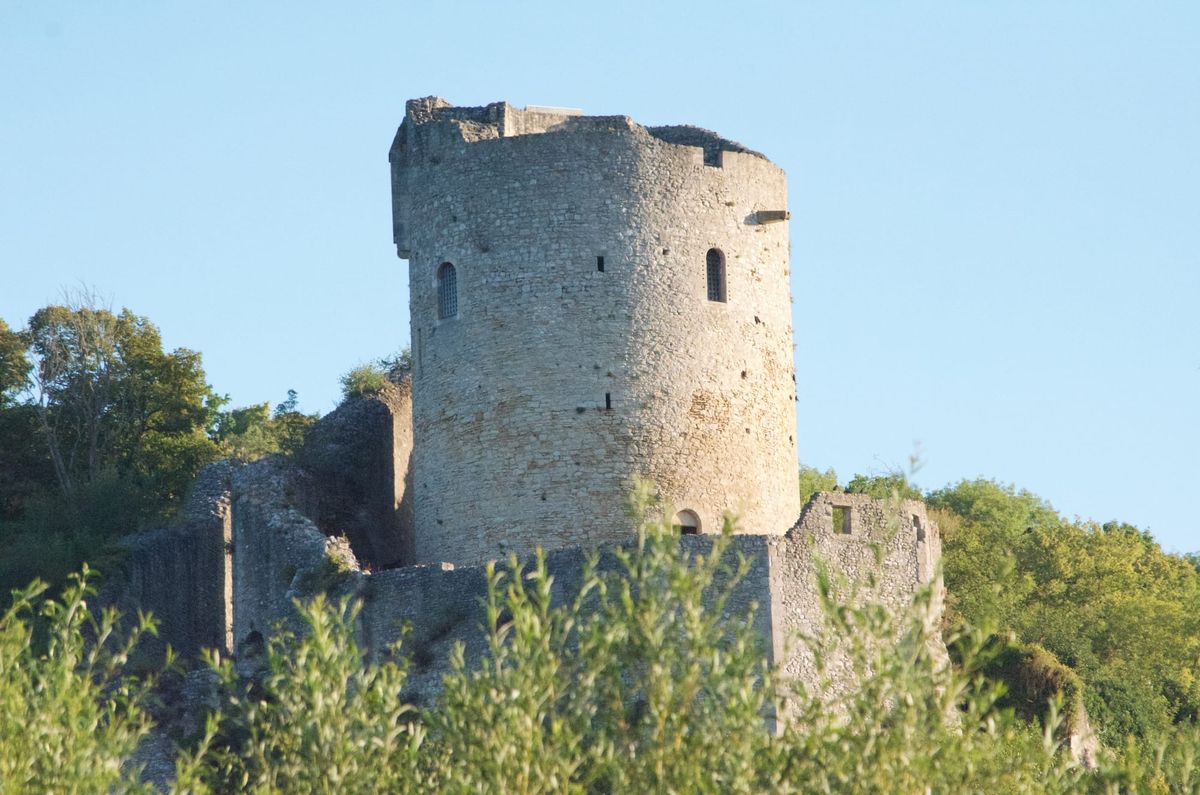
Following a delayed trip from Philadelphia to Montreal and ultimately ending in Paris, we arrived in France late but happy. The weather for the next 10 days was predicted to be sunny and unseasonably warm. With the entire trip ahead of us we were off to a very promising start. I had not studied our itinerary very closely, but I knew we had prebooked shore excursions in every port. Several days after departing our berth in Paris I woke one morning and hastily drew back the curtain from the balcony door. I immediately and involuntarily gasped. The scene framed by the sliding glass door was that of an upward sloping hill covered in foliage that drew your eyesight onto an enormous, stark white turret. The imposing size and perfect location gave the impression it had been placed there wholly formed by God or had been hewn from the surrounding rock by the sweaty efforts of humans toiling like stone devouring termites. We scurried down to breakfast very eager to commence with the day’s exploration.
La Roche Guyon had been used by Field Marshall Irwin Rommel during the Nazi occupation. Hitler had placed his favorite General in overall command of the Atlantic Wall. Rommel came to Normandy to bolster defensive operations with the objective of driving the Allies back into the sea. This unexpected dive into World War II history only intensified my desire to get the day underway.
Present day La Roche Guyon is a commune, dominated by the chateaux that includes the massive turret. There was very little decoration to be seen within, almost the antithesis of Versailles. In fact, at the time of our visit a substantial portion of the facility was hosting a modern comic book art exhibition. After winding through a labyrinth of rooms, we finally found ourselves on the path that led to our objective, the turret. The enormity of the structure can only be described as staggering. Despite what was clearly going to be a strenuous effort, nothing could keep us from taking on the challenge set before us.
The tower was indeed carved from the surrounding rockface. The dimensions of the steps were not uniform in any way. Their variable height and width recounting the story of endless hours spent with weary arms sculpting the massive rock formation. It was easy to see why chipping the footfalls by hand was a labor of functionality over form. Much of the ascent required being stooped over, grasping wrought iron rails or odd hand holds for stability. Navigating the tunnels very conscious of your feet, your head, and your hands while toting camera gear made our climb more of a dare.
Our constant upward plodding continued until at long last the tunnel gave way to wide open sky and the open turret top. A short walk in any direction brought you to the waist high boundary wall. The view of the river and the surrounding valley is more than commanding, it is a God’s eye view. Every vessel on the river is immediately visible miles in both directions. The vantage point provided unequalled watch over the entirety of the river valley. Rommel had obviously done his homework.
As we made our way out of the turret and back down into the house proper, I tried to envision the structure swarmed by the Wehrmacht, the sounds of hard soled boots against polished stone floors. The German high command did everything but cast runes to divine where the Allies would land. I imagined if I were to shout a command in English down one of the lengthy corridors, the resulting echo would be returned in German. The French rightly viewed the Germans as invaders, a malevolent parasitic species that now had to be driven from their bodies for a second time in less than 50 years.
That evening the on-board entertainment transformed the Viking long ship into a Jules Verne conveyance. Passengers reclined on strategically arrayed furniture, enveloped in the throwback sounds of a musical trio dressed in 1940’s period clothing. The lounge was alive with tunes that called to mind a USO dance replete with G.I.’s, all of them silently wondering if they would live to see any of the old familiar places. Strange to think that almost 80 years ago, these boys dreaded the beach I was now so eager to step upon.
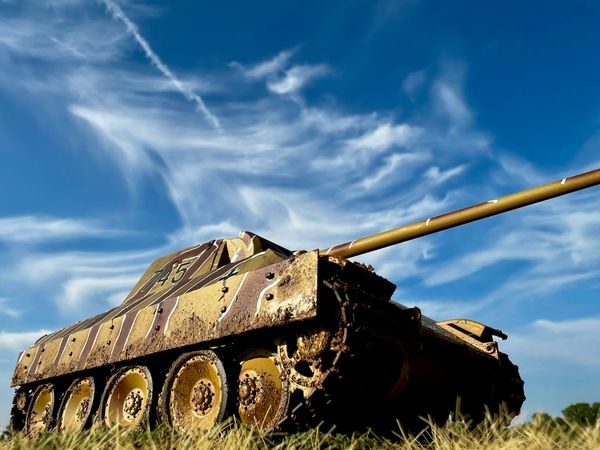
After breakfast the next morning I was for once happy to be aboard a bus. Staring eagerly as the surrounding countryside rolled by, the topology gradually morphing as we closed the distance to Omaha beach. I assumed that although modern life had imposed necessary evolution, the larger picture had not changed dramatically in the post war years. The highway cut through gently rolling fields and slowly narrowed like the neck of a funnel to lanes barely passible by two-way traffic. Modern signs bore familiar names like Caen, St Mere Église and Villers Bocage. I knew we were drawing close to our destination because our impossibly long bus struggled to negotiate an increasing number of near 90 degree turns. One of these geometry defying maneuvers brought me nose to nose with the first real Sherman tank I had ever seen. Strewn on the same front lawn were several rusting beach obstacles known as Czech hedgehogs, and in another first a German 88 mm flak gun. A weapon so devastating that Hitler would insist that an entire tank, the 70-ton King Tiger be built around its formidable destructive power. These static artefacts of war created a three-dimensional photograph of the conflict that raged here.
With another single turn of the bus, the scene changed into a stereotypical seaside community. The abrupt change of context made it seem as if the placid image before us was a misplaced slide in the carousel. To our left a smattering of tiny shops, cafes and standard beach adjacent souvenir stores. Generously sprinkled through the postcard worthy image excited children raced the heat to consume rather than wear their ice cream cones. Simultaneosly, dedicated beachgoers cut serpentine paths on their way towards the sand and surf. Cape May New Jersey meet the Normandy coast of France.
Stepping from the bus the relaxed vacation vibe was thick and unmistakable. This induced a sense of historic vertigo for me. As I crossed the threshold from the pavement onto the sand I was overcome by an unexpected emotion. Without doubt I felt a sense of disbelief as I set foot in a place I had longed to visit for most of my adult life. However, there was something else, something unexpected and growing. Anger. How does one vacation here on such hallowed ground? Before me, the sand was littered with the dead and dying. The surf running red with the blood of so many who would not see another sunrise. The combat footage I had seen hundreds of times projecting itself onto my subconscious. This was ground so fiercely contested that analysis of the present-day sand reveals it to be 3% shrapnel. In every direction the lifeless bodies of young men who found themselves here because they recognized the threat the Axis represented. Once full of optimism and the vigor of life, now scattered with limbs askew in grotesque repose. Grainy black and white footage of faceless soldiers literally running out of the waves for their very lives and onto a beach that Rommel had turned into a mine laden shooting gallery. My emotions began to carbonate my blood and the impulse to be an ugly American approached inevitable. Without notice, a clarifying thought cut through the conflicting images in my head. The serenity of a day at the beach was exactly what those who stormed ashore fought to secure. This mundane portrait of a day spent with the family enjoying the serenity of the sun and the warmth of loved ones propelled them ever forward in the face of mortal danger. They arrived here on that June morning seeking to guarantee that future for themselves, and unselfishly for me as well. For many of them, the image of this beach would be the final photo of earthly life they carried to heaven that day.
We boarded the bus for the next stop on the itinerary, the American cemetery overlooking Omaha Beach. From the parking lot, we entered the cemetery from behind, catching glimpses of a semi-circular colonnade that formed a partial backdrop that enclosed a large onyx black statue. Entering the cemetery proper along a paved path, we were parallel to a large cement and brick wall. There were names engraved on the poured concrete portions of the structure. Our guide would later tell us that the wall enshrined the names of those known to have participated in the D-Day landings, but for whom no earthly trace of their presence that day could be found. They were here one moment and gone the next, more like an erasure than a death. The curved sidewalk gave way to a broader expanse of concrete and the open space that faced the statue we had circled on our way into the memorial. Our cruise director Mia, who was French drew our attention as she began to speak. She explained that the statue reaching toward the sky is titled, ‘The Spirit of American Youth Rising From The Sea’. She continued by explaining that the French people will always be grateful to America for the sacrifices it made to liberate France. While she herself was not old enough to remember the war or its immediate aftermath, she had relatives who did. Mia told us that this sense of gratitude is now a necessary cultural imprint on the French people. She closed out her remarks by telling us that she knows that she would not have had the life she has had if not for the American forces that freed France not in conquest, but in liberation.
Mia turned the podium over to an American woman who works for the American Battle Monuments Commission. She began to explain some of the significant and thoughtful design features of the cemetery. The most subtle and meaningful for me was that all the grave markers face west toward America and home. Mia had arranged for the 5 veterans on the trip to lay a small wreath at the base of the flagpole. Following her remarks these five gentlemen undertook their solemn task. As if on cue the automated bells began to toll the hour. The vets saluted the flag, and we began to sing the Star-Spangled Banner. All the other visitors courteously stopped in respect as we honored those who had given their lives so that we might see this day. Tears were shed by all.
Emotionally drained we boarded the bus for the journey back to the comfort of our ship. As the miles clicked by, I could not help but recall how difficult it had been for American forces to move off the beachhead. As additional men and supplies landed on the beaches the Allies had to break out of the bocage country. Some of the objectives that were supposed to be in hand by D Day plus 3, did not fall for almost a month. We were driving effortlessly at highway speed on our way back to a fine meal and a comfortable bed. As perfect as the trip had been, I already knew this was the highlight of the entire experience for me.
The memories of that trip are never far from the forefront of my mind. In part because it was the perfect trip that proved to be more than an antidote for the toxic experience Amtrak delivered. Standing on Omaha beach added a new dimension to what it means to wake up every morning a free man and an American. However, the current political climate in the United States demands that I wonder what the honored dead, now forever facing home from a cemetery in France would think of how their legacy and the sacrifice it exacted are being tended to. America is deeply divided, and every day that division grows deeper, wider and increasingly bitter.
History will look back on the Trump era and judge it, and those who supported the most incompetent person to ever hold the office harshly. Much like the echoes at La Roche Guyon, the shadow cast by the White House is really that of the Reich Chancellery. So much so that a bunker is being built beneath what once was the East wing at the time of this writing. The President has already issued executive orders that in scope and intent read as if they were lifted directly from the Enabling Act. As the November midterm elections draw closer there is more at stake than at any other time in the history of our country.
Much like those who were conscripted during World War II, the voting public ride the rough surf during a turbulent struggle to preserve our way of life. We have been witness to government sponsored brutality unleashed on citizens by agents wearing ballistic vests that could just as easily be brown shirts. Those who do not fit the preferred profile have been detained and deported to foreign countries and incarcerated in a system of camps. For those who have paid attention, the rhyme scheme of the narrative if frightfully familiar.
As custodians of the legacy paid for us in advance our destiny is now. We are arriving on the shoreline of a future we are charged with securing for generations not yet conceived. In his letter to the troops on the eve of D -Day, then General Eisenhower characterized the pending operation as ‘the great crusade’. So too we approach our moment of reckoning across unsettled waters. We must meet the task at hand. If we fail to do so we will find ourselves staring into the eyes of those who look eternally homeward from above Omaha beach and find tears.